Why Frequent Feeding is Essential for Your Horse’s Health
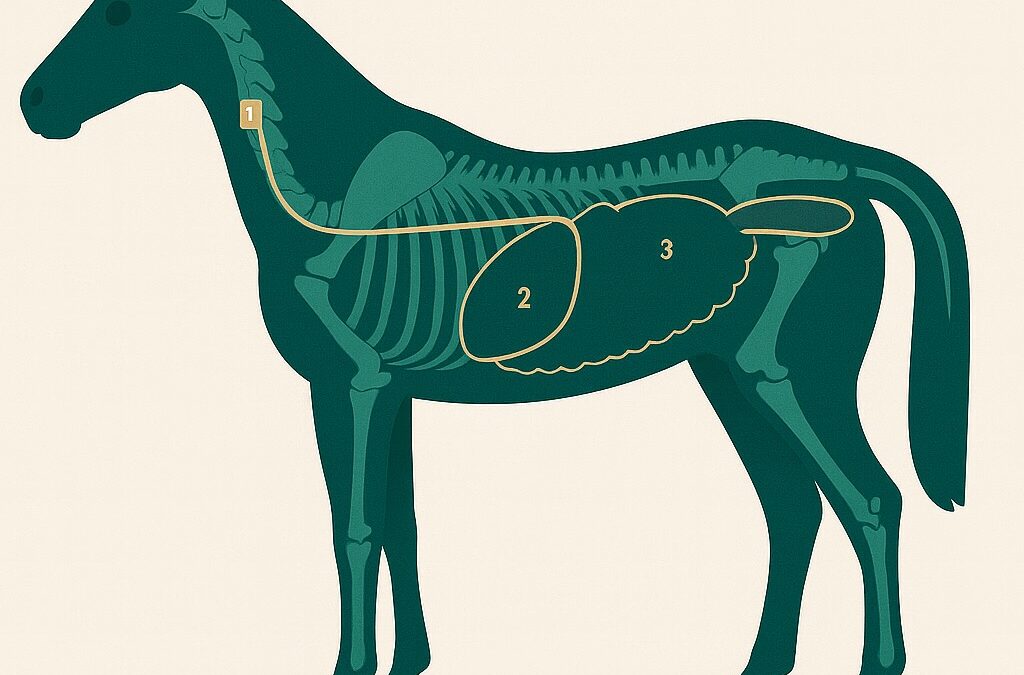
Horses are naturally herbivorous mammals and true migrators. Their digestive system has evolved to be perfectly adapted to grazing natural pastures. With a relatively small stomach (averaging 12 to 18 liters) and a much larger intestinal tract, horses are built to eat small portions regularly. This keeps the large intestine—where most digestion occurs—constantly active. By distributing the food supply in smaller amounts (forage, concentrates, etc.), you significantly reduce the risk of colic. Don’t forget: access to plenty of fresh water, in every season, is vital.
Forage: The Foundation of a Healthy Horse
For horses that spend a lot of time in stables, quality forage is indispensable. It keeps them occupied because eating longer reduces boredom and the potentially resulting stable. Moreover, forage stimulates saliva production, which is essential for proper digestion. Forage is digested more slowly than concentrates, allowing more energy to be extracted.
Calm and Regular Feeding Times
Horses thrive best with calm, set feeding times, preferably individually in a box. In groups, animals lower in the hierarchy risk being pushed aside, leading them to eat hastily. This can disrupt digestion and even cause health issues.
The Importance of Frequent and Varied Feeding
Not only the quality and quantity of the feed matter, but also the rhythm. Research from the last 15 years shows that horses fed spread out and with variety are calmer and easier to handle. By never having an empty or overly full stomach, horses are more willing to work and don’t see feeding time as a stress factor.
Mimicking the Natural Eating Cycle
In nature, horses spend 14 to 16 hours a day grazing. For domesticated horses, this is nearly impossible, but automatic feeding systems can approximate this natural distribution of feeding times. They provide multiple small portions per day, bringing calmness to the stable, which is especially beneficial for colic-prone horses.
More Energy, Less Waste
Smaller portions ensure that the horse fully utilizes the available energy. You can save up to 30% on feed costs, as there is less waste and digestion is more efficient. Studies even indicate that frequent feeding can reduce the chance of colic by 50% and the risk of gastric ulcers by 70%.
Conclusion: By focusing on frequent, smaller portions and high-quality forage, you not only optimize your horse’s health, but also its well-being, performance, and quality of life. An investment in frequent feeding pays off—in health and peace of mind.
Is it difficult for you to let go of feeding your horse, as this is also a special bonding moment? Fortunately, it doesn’t have to be. You can continue sharing this personal feeding time with your horse while perfectly combining it with an automatic feeding system. This way, your horse is supported even when you’re not there—bringing a positive effect on its health.