Feeding excessively large portions at once can overload the horse’s stomach and intestines.
This causes feed to enter the large intestine more quickly, where the intestinal flora is disturbed and digestion is impaired.
The result? A series of problems that are easily prevented with a well-considered feeding strategy.
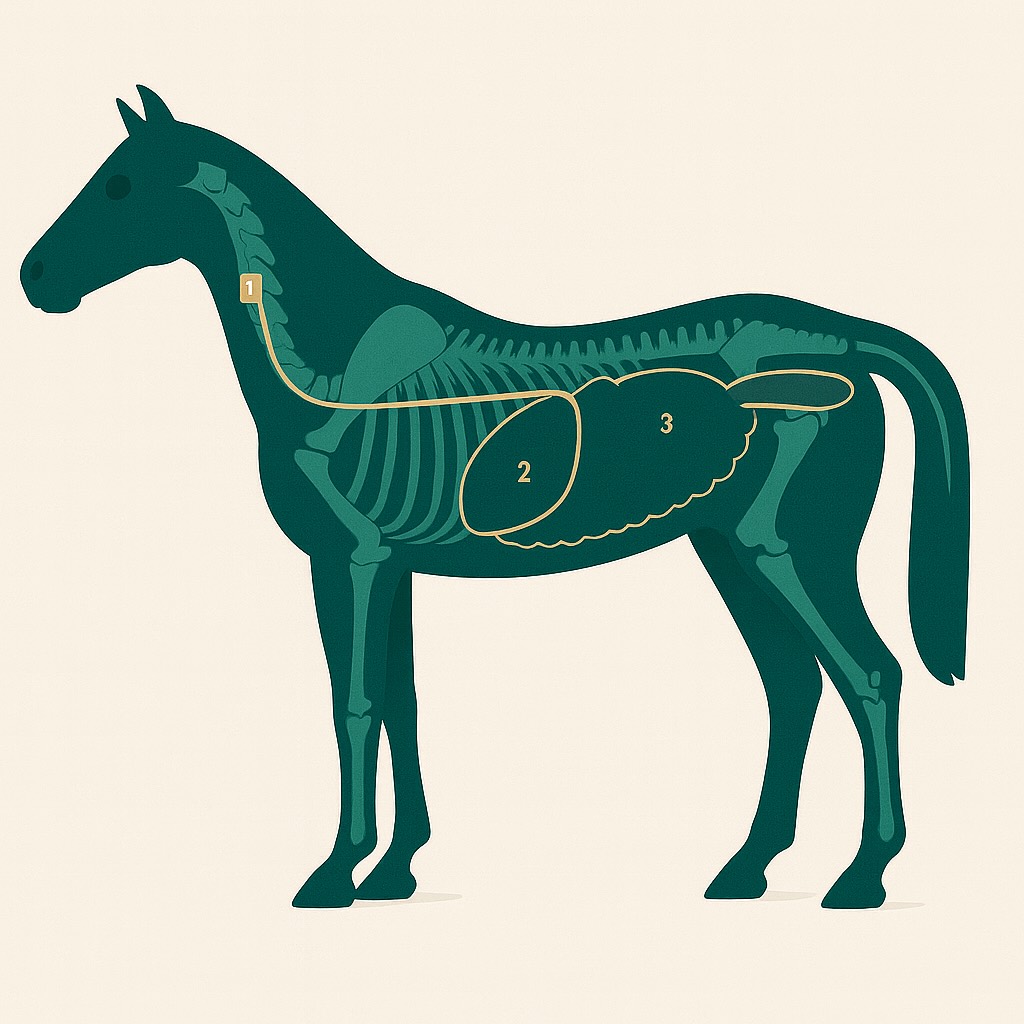
1. Esophageal Obstruction
Eating too quickly can lead to a blockage in the esophagus.
The feed doesn’t pass further into the stomach, making it impossible to swallow saliva.
Such an obstruction is painful and can even be life-threatening.
2. Gastric Ulcers
Prolonged or excessive use of concentrated feed can cause the stomach contents to become too acidic.
This irritates the stomach lining and can eventually lead to painful gastric ulcers.
3. Colic
When a horse is fed too much concentrated feed at once, it can cause colic. Colic isn’t a disease in itself, but a collective term for pain or disturbances in the digestive system.
It’s one of the most common and dangerous complications of improper feeding.
In Summary
Feed wisely. Large portions at once carry unnecessary risks.
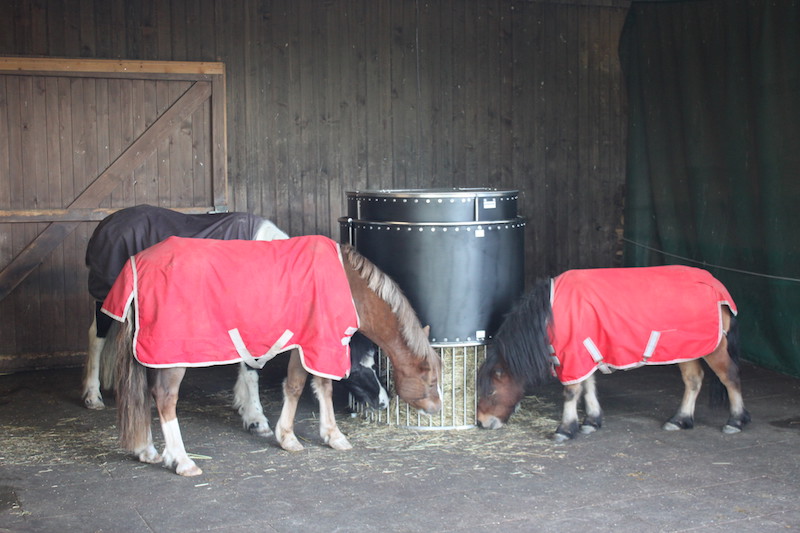
By cleverly dividing the feed into small, frequent meals, your horse’s digestion remains balanced —
and feeding contributes to a healthy, happy, and stress-free horse.